
RSS chief Mohan Bhagwat stated that regime-change agitations do not resolve fundamental problems and can become instruments of political interests, fuelling divisions rather than delivering solutions. He also called for discernment in consuming information, especially from OTT platforms, and stressed the importance of national unity based on emotional bonds.

The BJP has strongly criticised Congress leader Rahul Gandhi for allegedly providing a platform to "anti-India forces" at the Bharat Summit in Hyderabad. BJP spokesperson Gaurav Bhatia accused Gandhi of conspiring to defame the country and create instability, citing the participation of a foreign national who made critical remarks about India's democracy, which Gandhi reportedly applauded.

Defence Minister Rajnath Singh has expressed serious concern over ongoing student protests in Delhi, accusing the opposition of using them as a 'political tool' to further their interests. He urged opposition parties to raise issues in Parliament rather than on the streets, amidst demonstrations against the NEET paper leak.

The BJP has strongly criticised Congress leader Rahul Gandhi for his comments on the Indian economy made at Columbia University, where he described India as facing an "economic disaster." The ruling party accused Gandhi of engaging in "anti-India propaganda" and repeatedly portraying the nation negatively on foreign soil, despite global agencies recognising India as a fast-growing economy. BJP leaders highlighted India's economic progress and questioned Gandhi's motives for undermining the country's image internationally.

Congress leader Rahul Gandhi has declared Indian democracy 'sacred' and dismissed the idea of boycotting elections, arguing it would dismantle the country's democratic framework. His remarks, made at the University of Chicago, came as the BJP intensified its criticism, accusing him of spreading anti-India propaganda by reiterating vote theft allegations on foreign soil. Gandhi also commented on India's foreign policy and the Israel-Gaza conflict.

'If Gyanesh Kumar had some shame he would have resigned and would have taken agni pariksha.'

Abhijeet Dipke has issued a strong call to Indian opposition parties, urging them to boycott elections if they genuinely believe the electoral process is rigged, arguing that their continued participation only legitimises alleged unfairness.

Congress MLA Harish Dhami allegedly vandalised a stage at the Jauljibi Fair in Pithoragarh after being denied a chance to speak in the presence of Uttarakhand Chief Minister Pushkar Singh Dhami. The incident led to microphones and chairs being thrown, drawing condemnation from the BJP, which called for an FIR against the MLA. Harish Dhami defended his actions, stating he wanted to raise local issues, while the BJP attributed his behaviour to frustration over weakening party support.

Addressing a fireside chat in New York's Columbia University, Rahul Gandhi issued a stark warning about India's economic future, declaring the nation is on the brink of an "economic disaster" due to rampant unemployment, a failing manufacturing sector, and systemic issues within its education system.

The BJP is increasingly integrating its digital outreach with on-ground mobilisation, using social media attacks, political songs, marches, rallies, and public meetings to amplify its political messaging and counter opposition narratives. This evolving strategy, exemplified by the 'Loktantra Bachao, Arajakta Hatao' campaign, aims to take political contests beyond online platforms to streets and campuses, especially in response to the INDIA bloc's recent rally and accusations against the Election Commission.

CJP founder Abhijeet Dipke has boldly predicted the Modi government's defeat in the 2029 Lok Sabha elections, urging citizens to prepare for a change while demanding electoral reforms.

'Nobody, even the government, cannot compel Gyanesh Kumar to resign. He can only be removed through a constitutionally laid down process of impeachment. If he does get impeached, there will be political fallout on Mr Modi's government.'

Former Bangladesh Prime Minister Sheikh Hasina has strongly criticised Prime Minister Tarique Rahman's decision to skip the BRICS summit in India, calling it "immature" and detrimental to Bangladesh's national interest. She argued that the absence lost opportunities for economic development and that foreign policy should not be driven by personal considerations. Hasina also highlighted the current "grave national crisis" in Bangladesh and her intention to return to restore democracy.

From an Italian childhood to the heart of India's most consequential political family, Sonia Gandhi's memoir explores how we make a home, what we lose in the making, and what belonging demands of us.

Senior Congress leader Shashi Tharoor has strongly criticised the Bikaner House administration's decision to remove certain photographs from Raihan Vadra's exhibition before its opening. Tharoor termed the act as "petty" and "censorship," stating it casts a shadow on India's reputation as a democracy and a land of freedom of expression. He highlighted the removal of protest photographs and those featuring the tricolour, calling the decision "stupid" and counterproductive, as it has inadvertently boosted Raihan Vadra's profile.

The BJP criticised Rahul Gandhi's remarks comparing Prime Minister Modi to a "Mughal emperor" and calling the 2024 Lok Sabha elections "illegal" during the INDIA bloc's 'Vote Bachao, Desh Bachao' rally. BJP spokesperson Sambit Patra labelled the rally a "chaotic spectacle" and questioned Gandhi's claims, highlighting the democratic process that allows common people to rise to power.

Union Minister Rajnath Singh has accused the Congress and its allies of attempting to instigate a 'Bangladesh-like regime change' in India, leveraging youth energy for political confrontation and anarchy, rather than constructive nation-building.

India's Indo-Pacific approach has traditionally emphasised strategic autonomy, ASEAN centrality, freedom of navigation, respect for international law and an inclusive regional order. Its growing defence and maritime partnerships with Australia, Japan, Indonesia, Vietnam and other Southeast Asian countries provide additional depth to this approach, point out Dr Kumar and Dr Jasmeet Kaur.

Rahul Gandhi has ignited a political storm by accusing Prime Minister Narendra Modi, Amit Shah, RSS chief Mohan Bhagwat, and CEC Gyanesh Kumar of "vote chori" and "treason".

When it pretends to be deaf, a situation can snowball into something it cannot contain. The government cannot dismiss public anger merely because protests are inconvenient or politically embarrassing, asserts Ramesh Menon.

Amid the ongoing protests in the national capital, the Bharatiya Udyog Vyapar Mandal (BUVM), Delhi Pradesh, has written to Prime Minister Narendra Modi, Leader of the Opposition Rahul Gandhi and Aam Aadmi Party national convenor Arvind Kejriwal, appealing for political demonstrations in the capital to be postponed until January 31, 2027, citing the festival and wedding season.

With the anti-Gyanesh Kumar campaign, Rahul Gandhi is showing he is determined to not let anyone else claim credit for what follows, notes Saisuresh Sivaswamy.

'An individual who is protesting and expressing dissent is a walking Jantar Mantar.' 'Every mind which is expressing dissent and questioning is a Jantar Mantar.'

The UN human rights office expressed concern over mass detentions during protests in Delhi on Saturday, urging India to respect peaceful assembly rights and release detainees. India rejected these concerns as "misplaced" and "unwarranted interference." The protests, organised by the Gen Z-led Cockroach Janta Party (CJP), demanded electoral reforms and the resignation of CEC Gyanesh Kumar over alleged voter list manipulation, which the Election Commission and BJP deny.

The controversy surrounding actor Imran Khan's participation in a Mumbai protest, and BJP leader Kirit Somaiya's demand for his deportation, raises critical questions about the legal rights of Overseas Citizen of India cardholders to engage in political dissent and the grounds for their expulsion from India.

Voters who exercise their franchise in favour of a particular political dispensation do not do so unconditionally. Their loyalty is subject to maintaining trust and living up to their expectations. It is subject to allowing the freedoms guaranteed under the Constitution, points out Vice Admiral Biswajit Dasgupta (retd).

The Social Reckoning may lack the crackling energy of The Social Network, but Aaron Sorkin delivers a timely warning about what happens when a world-changing platform escapes the control of its creator.

A caste recalibration is simmering just below the surface in UP.

Lack of women in Karnataka's new council of ministers has put the spotlight once again on women's under-representation in politics and policy.

'Now the institutions which have the might of law invested in them think that whatever they do is right.'

Some see in the CJP the potential of weakening the Opposition. Hence the BJP/RSS's 'softly softly catchee monkey' approach, with co-option being the ultimate aim, points out Aditi Phadnis.
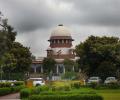
The Joint Parliamentary Committee (JPC) on simultaneous elections had scheduled an "informal interaction" with Supreme Court judges, which was later cancelled by the apex court. The Supreme Court deemed the meeting inappropriate as the proposed constitutional amendment could become subject to judicial review. JPC Chairman PP Chaudhary defended the panel's initial decision, citing precedents, while DMK MP P Wilson, who mooted the idea, expressed disappointment and argued against the notion that such interactions violate separation of powers.

An 'illegally' constructed mosque within the Saharanpur district collectorate complex was demolished following a court order, drawing strong condemnation from opposition parties who accused the government of engaging in 'politics of hate' and undermining social harmony.
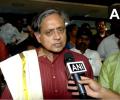
"It is high time India traded dynasty for meritocracy. This would require fundamental reforms, from imposing legally mandated term limits to requiring meaningful internal party elections, together with a concerted effort to educate and empower the electorate to choose leaders based on merit," Tharoor said.

'I had this fear that, dinner table talks would result in brainwashing youngsters as parents talk toxic communal news. But I'm so glad to realise that at least some section of youngsters depend on their own channels to more know more about political developments.'

RSS chief Mohan Bhagwat stated that a true Hindu believes in the unity of humanity and that all religious paths lead to the same goal, asserting that 'if any Hindu thinks that there should be no Muslim in Bharat, he will not remain Hindu'.

'If elections are held with honesty you will see their defeat.'

For India, the guiding principle should remain clear: Engage Bangladesh as a sovereign nation and society rather than through the prism of any individual leader or political party, suggests Manoj Mohanka.

When dialogue fails, protest becomes inevitable.
In a democracy, protest is often the only language left once institutions stop listening, explains Ramesh Menon.

A meeting of Tamil Nadu MPs, led by Chief Minister C Joseph Vijay, unanimously decided to oppose the Union government's proposed delimitation exercise, demanding its complete withdrawal and an extension of the delimitation freeze for another 25 years.
